
The Phoenix Project
Centuries-old redwood. Scorched by fire.
Reborn through fine woodworking.
Project Genesis
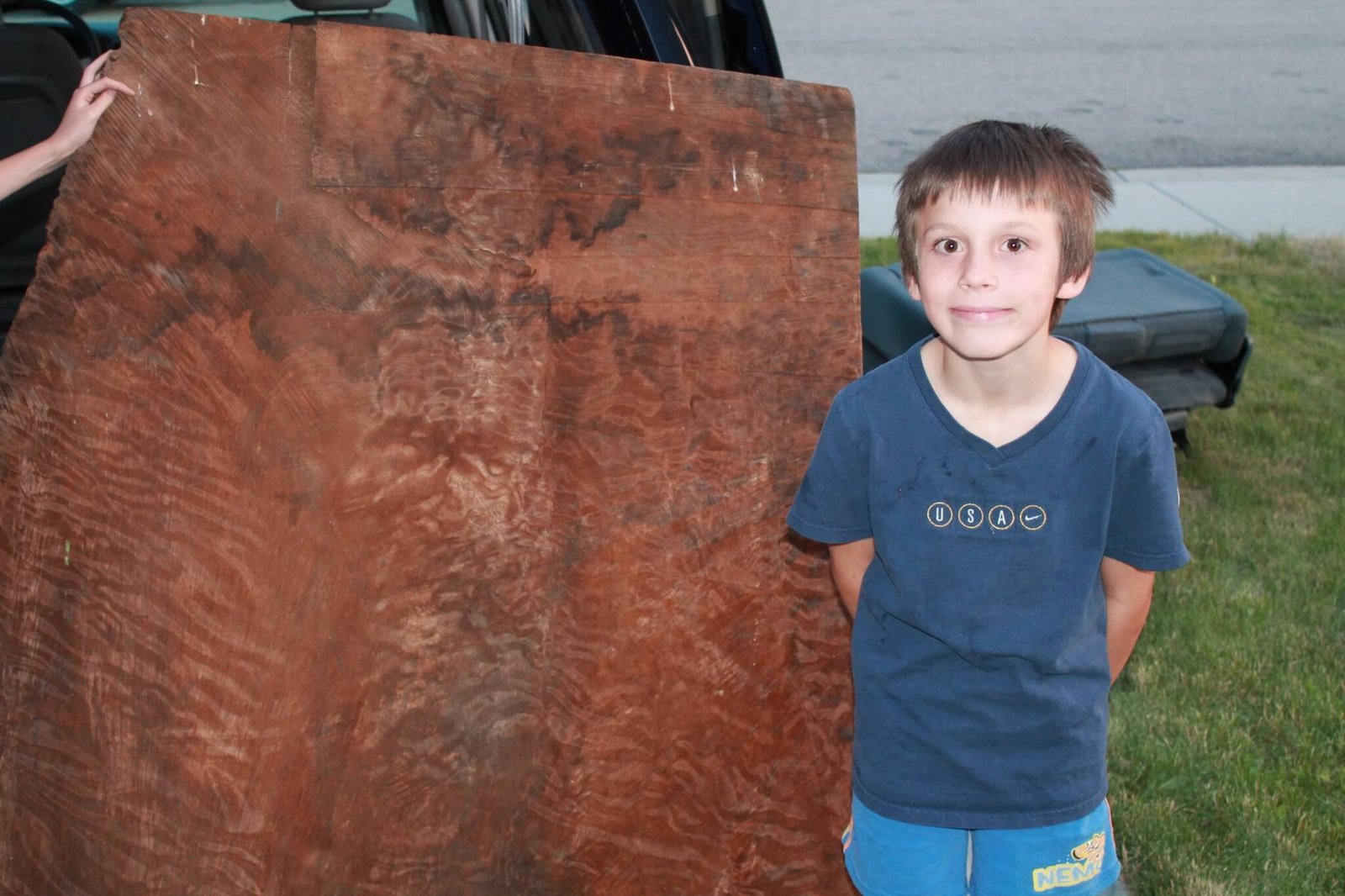
In the summer of 2013 my Dad brought me a present. He said, “Son, I’ve got a slab of wood that I think you should have. I think you’ll like it too.” Being an amateur wood hack I thought OK, fine with me. When he dropped it off I thought, “What am I going to do with this dirty grimy birdshit encrusted piece of wood?” I didn’t really look at it and just stored it away in my garage. Prior to putting the slab away I took a couple of pictures of it with my Boys standing in front.
Later that night I looked at the pictures and couldn’t believe what they were standing in front of. I knew the board might have interesting features but I wasn’t prepared for what I found.
It Got Interesting
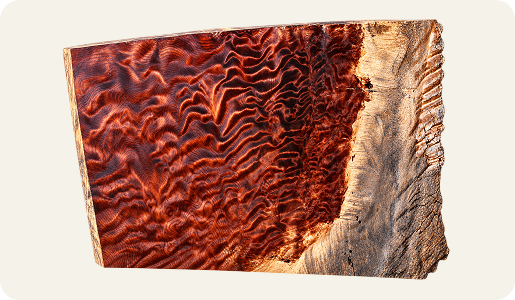
The following afternoon I took an R/O sander to one corner of the board and sanded a three foot by two foot section of the slab. Then I applied some Tung oil to the area. When I saw what I had I was flabbergasted. It was the most amazingly beautiful grain pattern I had ever seen on a piece of wood.
Historical Context
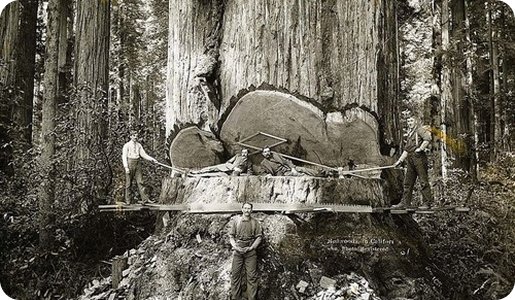
I started to do a little research into this wood and found out it had lived for centuries prior to being cut down. The tree was felled by lumberjacks, using axes and hand saws, in the late 1800s or early 1900s.
The stump, left to rot in a field, was 18 feet tall and 8 feet across at the top. The reason the tree was cut where it was is because the local lumber mill couldn’t handle a tree larger than 8 feet in diameter.
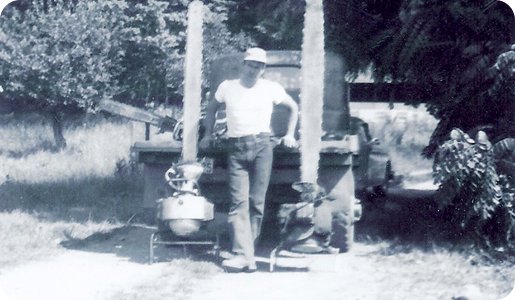
Hank and McKinleyville
The stump was eventually harvested by a man named Hank in the 1950s when he drove from Portland to McKinleyville, California. He cut the stump into a bunch of slabs and one of those slabs, 4 feet by 5 feet by 3 inches thick, got lost in the attic of his shop for decades. Now the slab is in my shop!
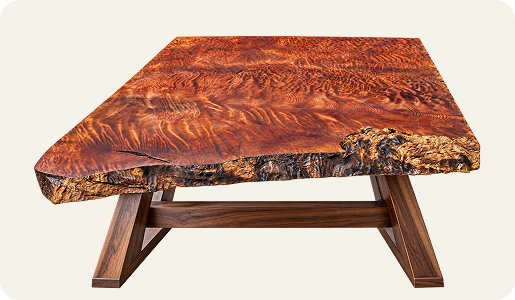
The Slab Today
Today, only a limited amount of this remarkable redwood remains.
This slab, approximately 4 feet by 5 feet and 3 inches thick, is the foundation for the Phoenix Project.
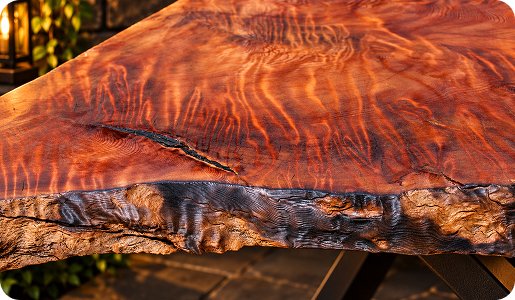
Extraordinary Grain
As the slab was cleaned and worked, incredible grain patterns and figure were revealed. The wood displays beautiful movement, color, and character that make each piece truly unique.
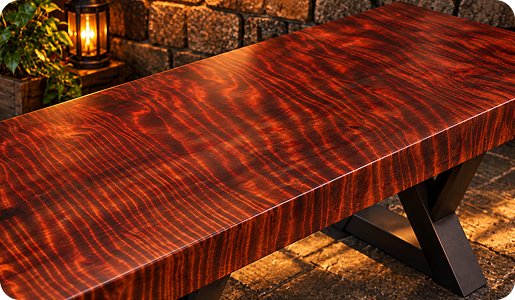
Another Piece of the Story
When Hank passed away, my dad was given the old-growth redwood bar from Hank’s home. Years later, he passed it on to me. Made from the same remarkable redwood, it is now another piece of the Phoenix Project waiting to be transformed.
What Can Be Created
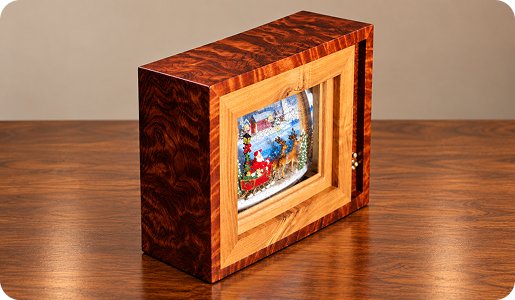
The Phoenix redwood is being transformed into heirloom-quality pieces. This Christmas snow globe is one example of what can be created from this extraordinary wood.
AMS Carbon Dating
The AMS carbon dating was conducted by ICA Laboratories using Accelerator Mass Spectrometry (AMS). The sample was redwood taken from the outer rings, closer to the bark than the heartwood.
Carbon Dating Summary
Sample Material
Calibrated Age Range 1 - IntCal20
Calibrated Age Range 2 - IntCal20
Calculated weighted midpoint estimate
Result
Redwood (outer rings)
1450-1530 AD (52.3% probability)
1550-1640 AD (43.1% probability)
~1467 AD
The sampled outer wood therefore formed approximately 500 years ago. Because the specimen came from the outer portion of the tree, the tree had already been growing for centuries before that wood formed.
The Certificate of Authenticity conservatively describes the redwood as approximately 500 years old. The heartwood, located deeper within the tree, likely formed centuries earlier, suggesting that the full age of the tree at harvest may have been between 700 and 900+ years.
Follow The Phoenix Project
Be notified as the project develops and when a future campaign launches.